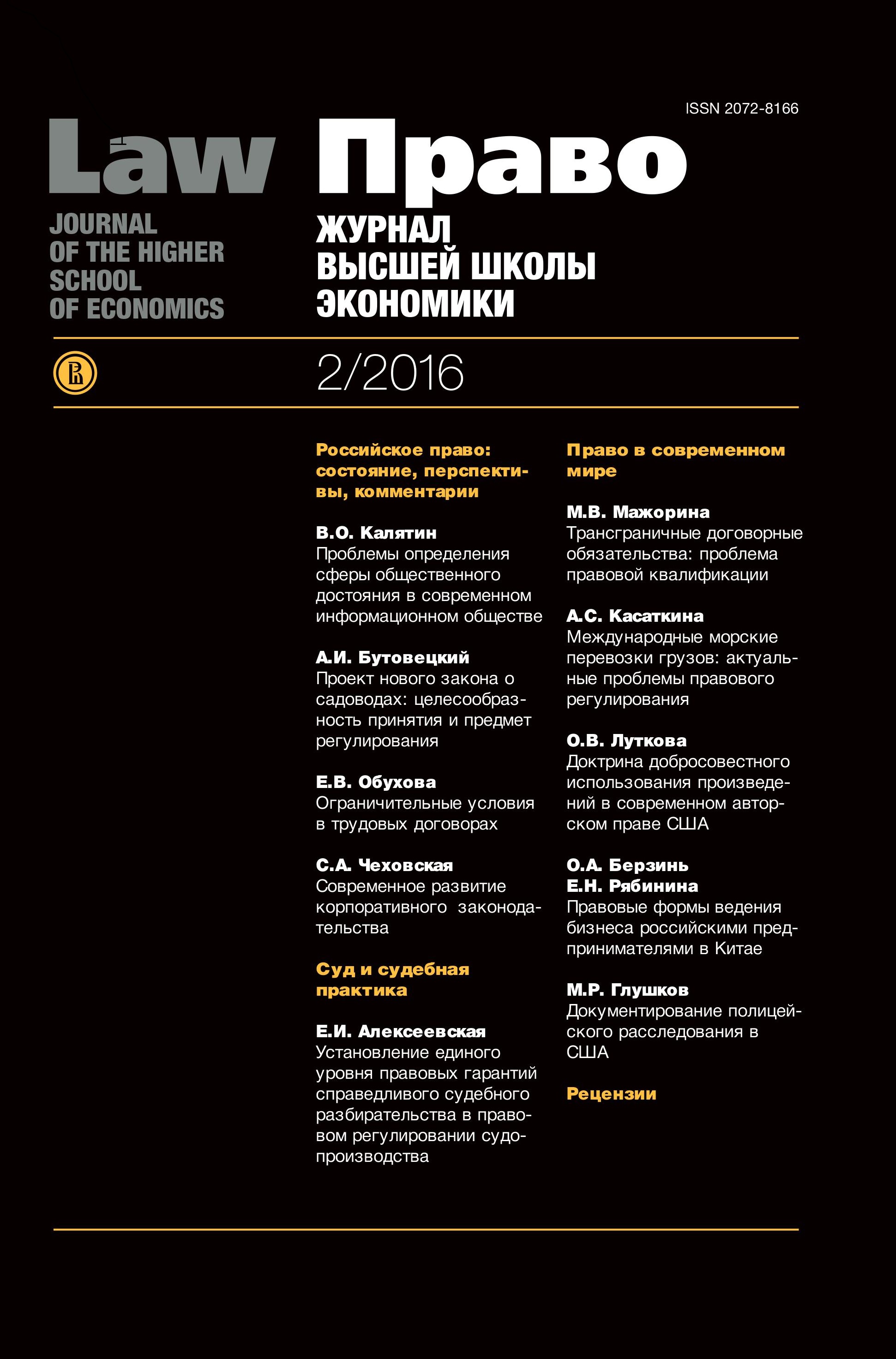
Доктрина добросовестного использования произведений в современном авторском праве США
Аннотация
Предметом исследования является доктрина добросовестного использования в авторском праве США, на основании которой осуществляется свободное использование произведений. В соответствии с доктриной добросовестного использования третьи лица могут беспрепятственно эксплуатировать защищенные авторским правом произведения при условии, что это способствует «прогрессу науки и полезных искусств» (п. 8 разд. 8 ст. 1 Конституции США). Особое внимание уделено анализу содержания доктрины добросовестного использования в авторском праве США в исторической перспективе от первых прецедентов американских судов, послуживших основой зарождения доктрины, и до ее современного состояния. Анализ проведен на основе признанных судебных прецедентов и некоторых решений американских судов последних лет, не имеющих статуса прецедентных решений. В исследовании использованы методы правового анализа, правового моделирования, правового прогноза, методы сравнительного правоведения и исторического анализа. Основными выводами исследования являются следующие. Выделены четыре основные черты доктрины добросовестного использования в современном авторском праве США. Во-первых, обоснование доктрины добросовестного использования защищенных авторским правом произведений посредством классических факторов оценки, закрепленных в Законе об авторском праве 1976 г.: 1) цель и характер использования, включая оценку коммерческой и образовательной составляющей; 2) природа произведения; 3) объем и значимость использованной части по отношению к целому произведению; 4) полезность эффекта использования произведения для потенциального рынка и ценности исходной работы. Во-вторых, возможность судей дополнительно использовать любые другие факторы оценки, а также отказываться от применения «классических» факторов. В-третьих, изменение квалификации некоторых классических факторов оценки по сравнению с более ранними периодами истории развития доктрины. В-четвертых, современная тенденция изменить сущностное восприятие доктрины добросовестного использования в правоприменительной практике США. Сделан общий вывод о непредсказуемости и спонтанности системы современного авторского права США, основанного на доктрине добросовестного использования. Также сделан вывод о недостаточном соответствии доктрины добросовестного использования требованиям Бернской конвенции об охране литературных и художественных произведений 1886 г. и критериям «трехступенчатого» теста проверки. Отмечены следующие основные сферы противоречий: цель регулирования, круг объектов регулирования, допустимые способы использования произведений.
Литература
Calvert C., Pember D. (2014) Mass Media Law. N.Y.: McGraw-Hill, 720 p.
Crews K.D. (1993) Copyright, Fair Use, and the Challenge for Universities: Promoting the Progress of Higher Education. Chicago: University of Chicago Press, 240 p.
Copyright and Fair Use Overview. Stanford: University Libraries, 2007. Available at: http://fairuse.stanford.edu/Copyright_and_Fair_Use_Overview/chapter9/9-a.html (accessed: 04.03.2016).
Gaita K., Christie A.F. (2004) Principle or Compromise? Understanding the Original Thinking behind Statutory License and Levy Schemes for Private Copying. Intellectual Property Research Institute of Australia working paper, vol. 4, pp. 1-36.
Gopalakrishnan N.S., Agitha T.G. (2014) Principles of Intellectual Property. 2nd. N.Y.: Paper Back, 597 p.
Heins M., Beckles T. (2005) Will Fare Use Survive? Free Expression in the Age of Copyright Control. Brennan Center for Justice. P.2. Available at: http://www.fepproject.org/policyreports/WillFairUseSur-vive.pdf (accessed: 04.03.2016)
Kalyatin V. O. (2015) O perspektivakh primeneniya v Rossii doktriny dobrosovestnogo ispol'zovaniya [On the Perspectives of Applying Fair Use Doctrine in Russia]. Zakon, no 11, pp. 2-9.
Louvish S. (2001) Monkey Business: The Lives and Legends of Marx Brothers. London: Macmillan, 464 p.
Lutkova O. V., Chernysh D. O. (2011) Konventsionnoe regulirovanie svobodnogo ispol'zovaniya proizvedeniy v transgranichnom kommercheskom oborote [Convention Regulation of Free Use of Works in Transborder Commercial Turnover]. Intellektual'naya sobstvennost'. Avtorskoe pravo i smezhnye prava, no 12, pp. 47-56.
Madison J., Nard C., McKenna M. (2013) The Law of Intellectual Property. N.Y.: Wolters Kluwer, 1440 p.
Owens R. (2003) TRIPs and the Fairness in Music Arbitration: The Repercussions. Available at: http://www.peteryu.com/intip/owens.pdf (accessed: 04.03.2016)
Scaria A.G. (2014) Piracy in the Indian Film Industry: Copyright and Cultural Consonance. Cambridge: Cambridge University Press, 338 p.
Shcherbak N.V. (2011) Predely avtorskogo prava i smezhnykh prav [Limits of Copyright and Neighboring Rights]. Zakonodatel'stvo, no 8, pp. 21-29.
Seltzer L.E. (1990) Exemptions and Fair Use in Copyright: The Exclusive Rights Tensions in the 1976 Copyright Act. Harvard: Harvard University Press, 208 p.
Thatcher S.G. Fair Use in Theory and Practice: Reflections on Its History and the Google Case. Available at: http://www.psupress.org/news/news_NACUA.html (accessed: 04.03.2016)
Copyright (c) 2016 Право. Журнал Высшей школы экономики

Это произведение доступно по лицензии Creative Commons «Attribution-ShareAlike» («Атрибуция — На тех же условиях») 4.0 Всемирная.