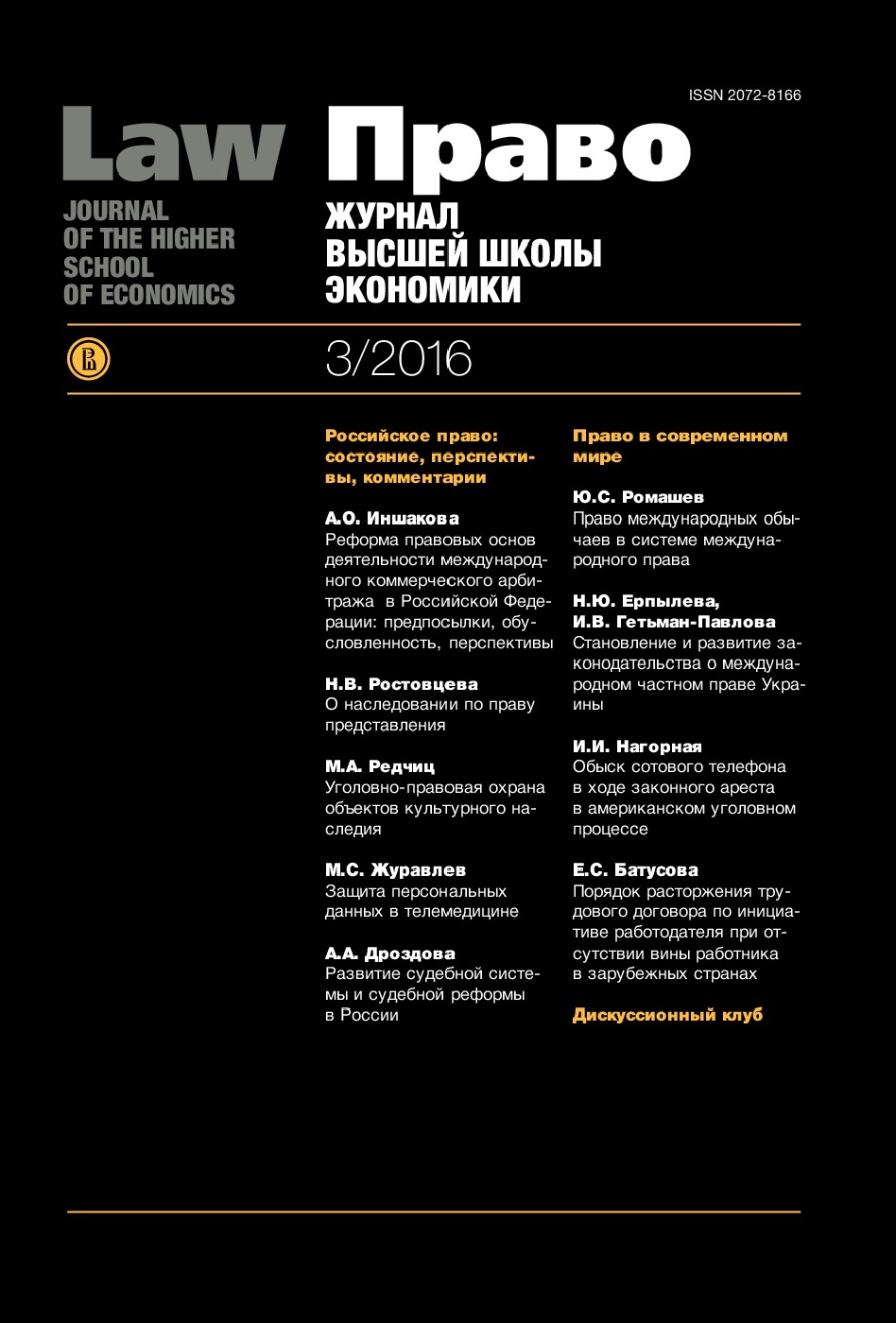
Порядок расторжения трудового договора по инициативе работодателя при отсутствии вины работника в зарубежных странах
Аннотация
Глобализационные процессы в экономике оказывают влияние на правовое регулирование труда, так как одними из основных затрат бизнеса являются затраты, связанные с работниками: заработная плата, иные денежные выплаты и др. Кроме того, инвесторов привлекает возможность быстрого реагирования на изменяющееся положение на рынке, что выражается, в частности, в возможности уволить тех работников, которые не нужны для развития предприятия. На текущем этапе экономического развития для законодателя возникла потребность сохранить привлекательность национального трудового права для работодателей и одновременного усилить защиту трудовых прав работника, в частности, при расторжении трудового договора при отсутствии его вины. Законодатели зарубежных стран по-разному решают этот вопрос, имея целью правового регулирования труда соблюдение баланса интересов работодателя и работника. Средства обеспечения такого баланса зависят, в частности, от специфики правового регулирования в каждой конкретной стране. Критериями сравнения являются требования к форме предупреждения о прекращении трудового договора, критерии установления срока предупреждения, наличие или отсутствие уведомления государственного органа, представительного органа работников, необходимость согласования с государственным органом увольнения отдельных категорий работников. В статье рассмотрены основные положения порядка расторжения трудового договора в Австрии, Великобритании, Германии, Испании, Канаде, Румынии, Франции, Швейцарии. Правовому регулированию расторжения трудового договора по инициативе работодателя при отсутствии вины работника в зарубежных странах присущи общие черты: право работодателя уволить работника по основаниям, предусмотренным в законодательстве, с соблюдением определенного порядка; отсутствие дисциплинарного проступка как основания дисциплинарной ответственности, в рамках которой к работнику может быть применен работодателем такой вид дисциплинарного взыскания, как увольнение; наличие предупреждения об увольнении. Анализ правового регулирования расторжения трудового договора позволяет выделить три модели: страны с превалированием гибкости регулирования над жесткостью, страны с доминированием жесткости регулирования над гибкостью, страны со смешанным подходом.
Литература
Blanpain R. (2001) Labour Law, Human Rights and Social Justice: Liber Amicorum in Honour of Prof. Dr. Ruth Ben Israel. Kluwer Law International. 300 p.
Creighton B., Stewart A. (2005) Labour Law. Sydney: The Federation Press, 684 p.
Feichtinger J., Klinger B. (2007) Austria. Getting the Deal Through — Labour & Employment. London: CerhaHempelSpiegelfeldHlawati, 34 p.
Hardy S. (2011) Labour Law in Great Britain. Wolters Kluwer, 340 p.
Khabrieva T.Ya. (2014) Osnovnye vektory i problemy razvitiya sotsial'nogo zakonodatel'stva [Vectors and Issues of development of Social Legislation]. Zhurnal rossiyskogo prava, no 8, pp. 5-15.
Kiselev I.Ya. (2005) Trudovoe pravo Rossii i zarubezhnykh stran. Mezhdunarodnye normy truda [Labour Law in Russia and Abroad. International Labour Norms]. Moscow: Eksmo, 608 p. (in Russian)
Kiselev I.Ya. (1997) Trudovoy dogovor: voprosy regulirovaniya nayma i uvol'neniya [Labour Contract: Regulating Recruitment and Dismissal]. Moscow: Ministerstvo truda i sotsial'nogo razvitiya, 102 p. (in Russian)
Kurennoy A.M. (2015) Sotsial'noe gosudarstvo i sotsial'noe partnerstvo: kak soedinit' usiliya? [Social State and Social Partnership: Joining Forces]. Trudovoe pravo v Rossii i za rubezhom, no 4, pp. 3-7.
Lyutov N.L. (2016) Sotsial'nye i trudovye otnosheniya v usloviyakh ekonomicheskogo krizisa: soblyudenie balansa interesov [Social and Labour Relations in Economic Crisis: Balance of Interests]. Zhurnal rossiyskogo prava, no 1, pp. 30-38.
Lucassen K., Sluter S., Shul M., Wang M. (2014) Corporate Law. Employment Law in Switzerland. Journal of the International Institute for Law and Medicine, pp. 165-173.
Sklyarova D.V., Lipskaya E.I. (2013) Trudovoe zakonodatel'stvo Shveytsarii [Swiss Employment Law]. Trudovoe pravo v Rossii i za rubezhom, no 2, pp. 45-50.
Swiss Employment Law. CMS von Erlach Henrici. Zurich: CMS, 2012, 24 p.
Vasil'eva V.I. (2006) Osobennosti prekrashcheniya trudovogo dogovora po zakonodatel'stvu Avstrii i Frantsii [Terminating Employment Contract in Austria and France]. Yurist, no 3, pp. 39-42.
Waas B. Employee Representation at the Enterprise in Germany. Available at: http://www.jil.go.jp/eng-lish/reports/documents/jilpt-reports/no.11_germany.pdf (accessed 24 June 2016).
Wendler M., Tremml B., Buecker B.J. (2013) Key Aspects of German Business Law: A Practical Manual. Springer Science & Business Media, 334 p.
Copyright (c) 2016 Право. Журнал Высшей школы экономики

Это произведение доступно по лицензии Creative Commons «Attribution-ShareAlike» («Атрибуция — На тех же условиях») 4.0 Всемирная.