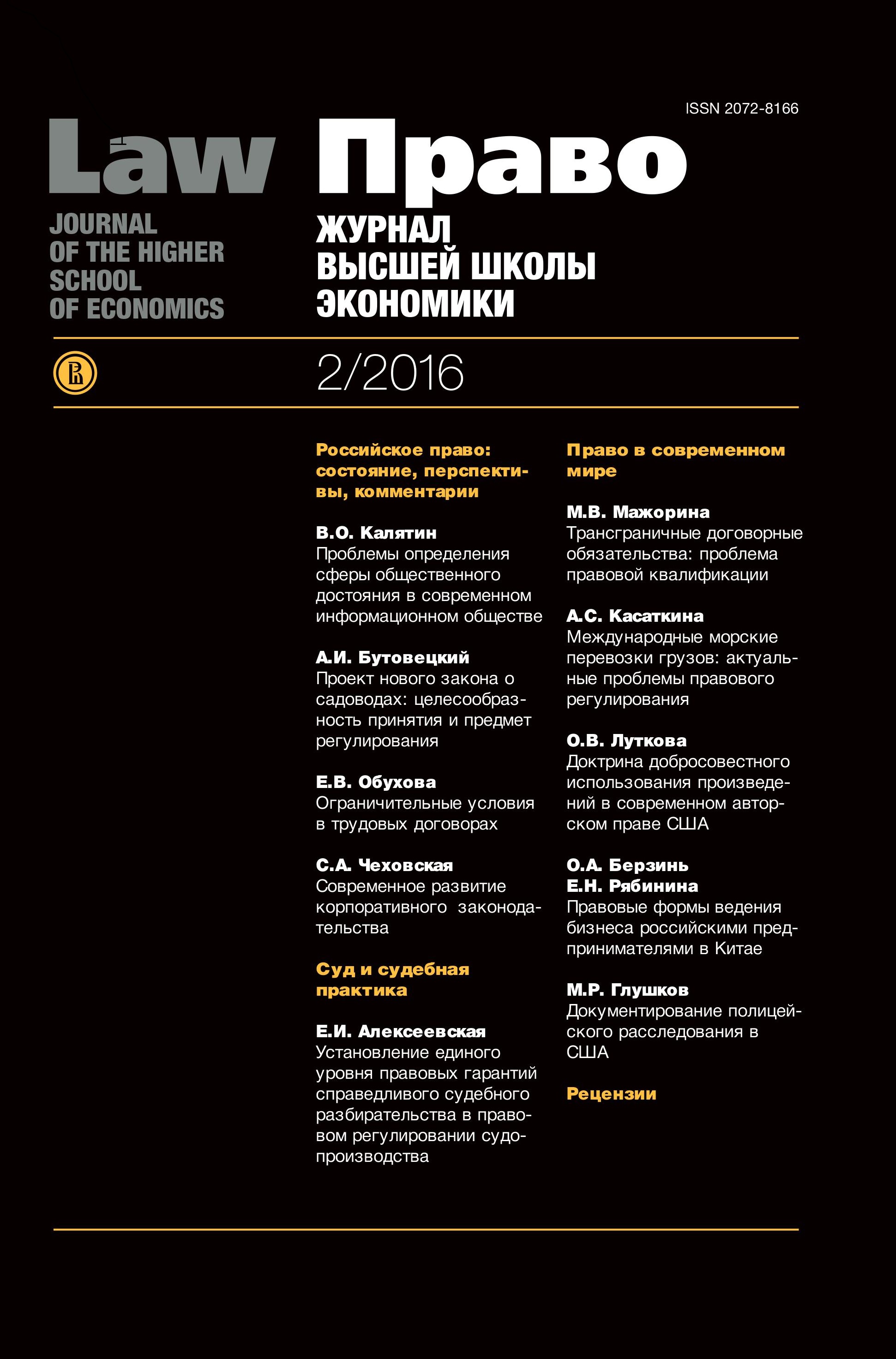
Документирование полицейского расследования в США
Аннотация
В статье рассмотрены главные особенности досудебного производства по уголовным делам в Соединенных Штатах Америки. Оно регулируется судебными прецедентами, ведомственными нормативными актами и процессуальным законодательством штатов. По форме эта деятельность представляет собой смешение процедур, которые в Российской Федерации принято относить как к следственным, так и к оперативно-розыскным, а также административным. При этом единых правил производства следственных мероприятий указанные выше документы не устанавливают. Как следствие, не идет и речи об их единообразном оформлении. В вопросах документирования следственных процедур правоприменители ориентируются на приказы и руководства управлений полиции, которые весьма подробно регламентируют действия сотрудников. Кроме того, существуют различные руководства, подготовленные для практических работников правоохранительными ведомствами — Министерством юстиции США, Национальным институтом правосудия, Национальным центром криминалистических технологий и др. Документированию следственных действий посвящены разделы соответствующих учебно-методических изданий, составленных известными криминалистами. В целом положения этих руководств и изданий соотносятся с требованиями полицейских приказов. Традиционными способами документирования являются записи (notes) и отчеты (reports). Они могут составляться как в свободной форме, так и на бланках установленного образца (forms). Наряду с этими средствами фиксации практикуются фото- и видеосъемка, а также составление планов и схем (sketches). Все эти способы документирования являются равнозначными и рассматриваются как неотъемлемые части единого процесса «сплошной фиксации» следственных процедур. Они применяются, не подменяя друг друга, поскольку у каждого из них имеются преимущества и недостатки. Например, записи не всегда могут обеспечить наглядность описания; фотосъемка с этим справляется лучше, но подчас требует многочисленных пояснений. Видеозапись фиксирует место происшествия в динамике, но для целей последующего криминалистического исследования, в отличие от фотографий, не годится. Привычный российскому следователю протокол, как единый документ, отражающий ход и результаты следственного действия, американскому правоприменителю незнаком.
Литература
Bastrykin A.I. (ed.) (2014) Aktual'nye problemy teorii gosudarstva i prava: uchebnoe posobie [Urgent Problems of Theory of State and Law: Manual]. Moscow: YUNITI-DANA, 471 p. (in Russian)
Buckles T. (2007) Crime Scene Investigation, Criminalistics and the Law. New York: Thomson Delmar Learning, 312 p.
Dutell A. (2014) An Introduction to Crime Scene Investigation. Burlington: Jones and Bartlett, 558 p.
Exclusionary Rule. The Free Dictionary by Farlex (2008). Available at: http://legal-dictionary.thefre-edictionary.com/Exclusionary+Rule (accessed: 02.11. 2015)
Show-up. The Free Dictionary by Farlex (2000). Available at: http://legal-dictionary.thefreedictionary.com/Show-Up (accessed: 02.11.2015)
Glushkov M.R. (2015) Dokumentirovanie iz”yatiya v khode operativno-rozysknoy deyatel'nosti [Documenting Seizure of Possession in Operative Investigative Activity]. Rossiyskiy sledovatel', no 2, pp. 48-52.
Golovko L.V. (2014) Arkhetipy dosudebnogo proizvodstva, vozmozhnye perspektivy razvitiya otechestvennogo predvaritel'nogo sledstviya [Archetypes of Pre-trial Proceedings, Perspectives in the Development of Russian Pre-Trial Investigation]. Ugolovnoe sudoproizvodstvo, no 2, pp. 9-16.
Kalinovskiy K.B. (2000) Ugolovnyy protsess sovremennykh burzhuaznykh gosudarstv: uchebnoe posobie [Criminal Process in Modern Bourgeois States: Manual]. Petrozavodsk: PetrGU, 48 p. (in Russian)
Lee H. et al. (2001) Henry Lee's Crime Scene Handbook. New York etc.: Elsevier Academic Press, 416 p.
National Forensic Science Technology Center (2013). Crime Scene Investigation: A Guide for Law Enforcement. Available at: http://www.nist.gov/forensics/upload/Crime-Scene-Investigation.pdf (accessed: 05.11. 2015).
Stoyko N.G., Semukhina O.B. (2000) Ugolovnyy protsess v SShA [Criminal Trial in the US]. Krasnoyarsk: Krasnoyarsk State University, 315 p. (in Russian)
Swanson C., Chamelin N., Territo L. (2001) Criminal Investigation. Available at: http://highered.mhedu-cation.com/sites/0072564938/student_view0/chapter4/chapter_outline.html (accessed: 05.11.2015)
U.S. Department of Justice (1999) National Institute of Justice. Crime Scene Investigation: A Guide for Law Enforcement. Available at: https://www.fbi.gov/about-us/lab/forensic-science-communications/fsc/april2000/twgcsi.pdf (accessed: 05.11.2015)
U.S. Department of Justice (2000). National Institute of Justice. Death Investigation: A Guide for the Scene Investigator. Available at: https://www.ncjrs.gov/pdffiles/167568.pdf (accessed: 05.11.2015)
Zor'kin V. D. (2016) Konstitutsionnyy Sud - eto negativnyy zakonodatel' [Constitutional Court is a Negative Legislator]. Available at: URL: http://www.legis.ru/misc/news/7800/ (accessed: 09.11. 2015)
Copyright (c) 2016 Право. Журнал Высшей школы экономики

Это произведение доступно по лицензии Creative Commons «Attribution-ShareAlike» («Атрибуция — На тех же условиях») 4.0 Всемирная.