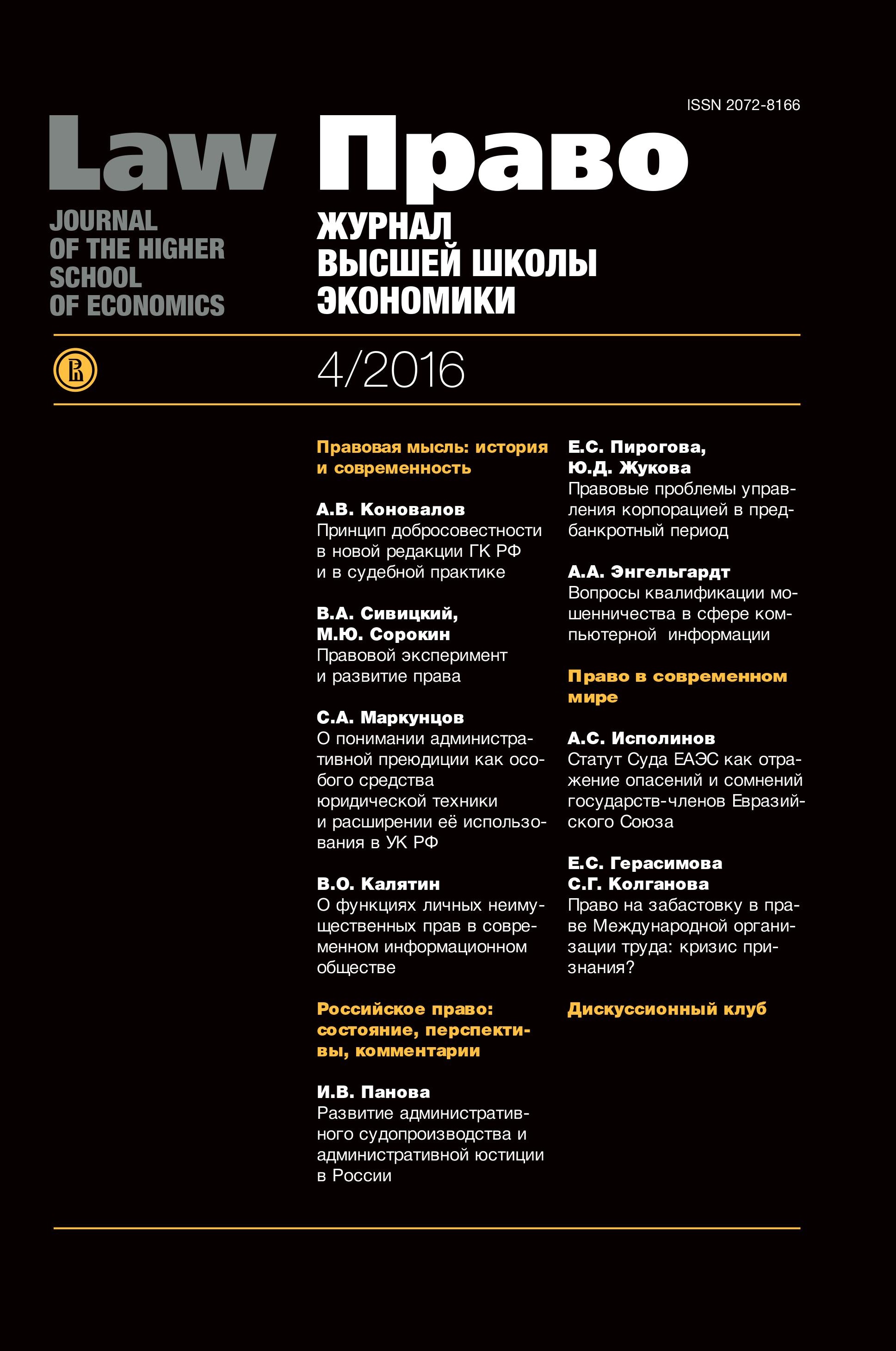
Вопросы квалификации мошенничества в сфере компьютерной информации
Аннотация
Статья посвящена отдельным вопросам квалификации мошенничества в сфере компьютерной информации. Автор делает вывод, что эту сферу как объективный признак состава рассматриваемого преступления образуют те области, где практическую деятельность (фактические и юридические действия) составляет функционирование электронных платежных систем, в которых дистанционно совершаются операции с использованием банковских карт, безналичных денег и т.п. Не выходя за пределы этой сферы, виновный может приобрести противоправную имущественную выгоду (приобрести отношение к имуществу как к своему) в виде безналичных денег, бездокументарных ценных бумаг, иного права на имущество. Об этом свидетельствует приводимая в статье обширная судебная практика. Совершение хищения наличных денег, иных материальных предметов, как правило, «заставляет» на каком-то этапе исполнения операции в сфере компьютерной информации сочетать с действиями вне информационной среды: изготовлением поддельных доверенностей, обманным получением дубликатов сим-карт, изъятием наличных денежных средств и др. В условиях, когда уголовная ответственность за хищения дифференцируется в зависимости от его способов (форм), эти обстоятельства могут привести к конкуренции при правовой оценке содеянного. Предлагается исходить из следующих соображений. Новые запреты включаются в существующую, сложившуюся за долгие годы систему. Действия, которые всегда оценивались как кража или иное хищение, не могут поменять своей природы в связи с их выполнением в части указанным в ст. 159.6 УК РФ способом. Например, если посредством совершения операций в сфере компьютерной информации субъект еще не получил господства над объектом посягательства, и для получения возможности реально распоряжаться и пользоваться им он должен тайно изъять имущество, это будет уже кража. Таким образом, в круг деяний, квалифицируемых по статье 159.6 УК РФ, нужно ввести лишь те, когда для завершения преступления не требуется наряду с указанными в статье действиями в сфере компьютерной информации совершение иных действий, оцениваемых как способ изъятия (обособления или удержания) предмета, присущего иной форме хищения. Судебная практика пока не дает явных, да даже неявных оснований для выводов, что данный подход принят по существу.
Литература
Dobrovol'skiy V.I. (2014) Moshennichestvo v sfere kreditovaniya i smezhnye sostavy prestupleniy: voprosy primeneniya i razgranicheniy st. 159.1, 159.3 UK I inykh sostavov prestupleniy [Fraud in Crediting and Correlated Components of Crime]. SPS Konsul'tantPlyus.
Esakov G.A. (2014) Ugolovnyy zakon i predprinimateli: dostizheniya I proschety [Criminal Law and Entrepreneurs: Achievements and Issues]. Ugolovnoe pravo i sovremennost', vyp. 5, pp. 104-122.
Kochoi S.M. (2014) Prestupleniya protiv sobstvennosti [Crimes against Property]. Moscow: Prospekt, 88 p. (in Russian)
Lopashenko N.A. (2012) Posyagatel'stva na sobstvennost' [Infringement of Property]. Moscow: Norma, 527 p. (in Russian)
Lopashenko N.A. (2015) Zakonodatel'naya reforma moshennichestva: vynuzhdennye voprosy i vynuzhdennye otvety [Reform in the Legislation on Fraud: Involuntary Questions and Involuntary Answers]. Kriminologicheskiy zhurnal Baykal'skogo gosudarstvennogo universiteta ekonomiki i prava, vol. 9, no 3, pp. 504-513.
Potapkin S.N. et al. (2015) Voprosy ob”ektivnoy storony moshennichestva v sfere komp'yuternoy informatsii v sudebno-sledstvennoy praktike. Biblioteka nauchnykh publikatsiy elektronnogo periodicheskogo spravochnika, no 1, SPS Garant.
Shumikhin V.G. (2014) Sed'maya forma khishcheniya chuzhogo imushchestva [Form 7 of Embezzlement of Property]. Vestnik Permskogo universiteta. Yuridicheskie nauki, vyp. 2, pp. 229-233.
Smolin S. (2014) Ugolovno-pravovaya bor'ba s vysokotekhnologichnymi sposobami i sredstvami soversheniya prestupleniy. Ugolovnoe pravo, no 4, pp. 62-68.
Tret'yak M. (2014) Moshennichestvo kak prestuplenie protiv sobstvennosti v sovremennom ugolovnom prave: kurs lektsiy [Fraud as a Crime against Property in Modern Criminal Law: Lectures]. Moscow: Yurlitinform, 200 p. (in Russian)
Tret'yak M. (2015) Problemy kvalifikatsii novykh sposobov moshennichestva [Issues in Classifying New Frauds]. Ugolovnoepravo, no 2, pp. 94-98.
Tret'yak M. (2014) Pravila kvalifikatsii komp'yuternogo moshennichestva I prestupleniy, predusmotrennykh gl. 28 UK RF [Classifying Cyber Frauds and Crimes under Chapter 28 of the RF Criminal Code]. Ugolovnoe pravo, no 4, pp. 69-74.
Tyunin V. (2013) «Restrukturizatsiya» ugolovnogo zakonodatel'stva ob otvetstvennosti za moshennichestvo [Restructuring Criminal Law on Liability in Fraud]. Ugolovnoe pravo, no 2, pp. 35-41.
Yani P.S. (2015) Spetsial'nye vidy moshennichestva. [Special Types of Fraud]. Zakonnost', no 8, pp. 35-40.
Yuzhin A.A. (2016) Moshennichestvo i ego vidy v rossiyskom ugolovnom prave. (dis... kand. yurid. nauk.) [Fraud and its Types in Russian Criminal Law. (Candidate of Juridical Sciences Dissertation)]. Moscow: MGYuA. 238 p.
Zhalinskiy A.E. (2015) Ugolovno-ekonomicheskoe pravo: problematika opredelennosti zakona (rossiyskie I nemetskie vzglyady). Izbrannye trudy. T. 2. [Criminal and Economic Law: Issues in Law (Russian and German Views) Selected Works]. Vol. 2. Moscow: HSE Publishers, pp. 317-329 (in Russian)
Copyright (c) 2016 Право. Журнал Высшей школы экономики

Это произведение доступно по лицензии Creative Commons «Attribution-ShareAlike» («Атрибуция — На тех же условиях») 4.0 Всемирная.