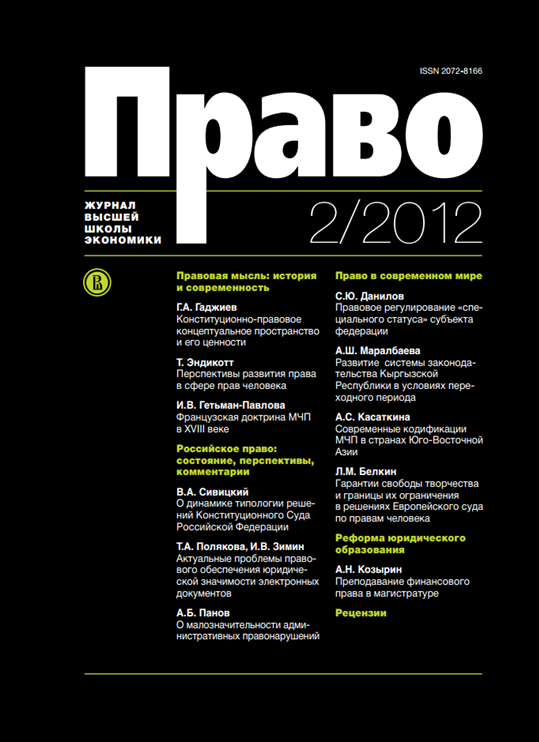
Актуальные проблемы правового обеспечения юридической значимости электронных документов
Аннотация
Данная статья знакомит с наиболее важными аспектами правового регулирования электронной документации – относительного нового явления, получившего распространение в связи с созданием в Российской Федерации современной информационной и телекоммуникационной инфраструктуры, поскольку при построении информационного общества и электронного государства в связи с процессом развития единого информационного пространства в Российской Федерации особое значение приобретают вопросы формирования правовой основы юридической значимости электронных документов. Источниками являются: Стратегия развития информационного общества в России, федеральное законодательство 1990-х, 2000-х и частично 2010-х годов, подзаконные акты, работы российских юристов-теоретиков и административистов. Правовое регулирование электронной документации рассматривается авторами в рамках проблематики формирования единого информационного пространства Российской Федерации, что подразумевает необходимость перехода к электронному взаимодействию всех институтов государства, организаций и граждан. В публикации определяется и уточняется целый ряд понятий – таких, как электронный документ, юридическая значимость электронного документа, правовой режим электронного документа. На примерах избранной авторами темы прослеживается эволюция понятийного аппарата российской правовой науки. Указывается, в частности, что понятие правового режима плодотворно изучается специалистами различных отраслей права, выдвинуто немало его определений, однако его унифицированного определения до сих пор нет. Поэтому во многих законодательных актах и отраслевых кодексах России определение правового режима либо отсутствует, либо дается через нормы, отсылающие к другим видам правовых актов. В работе анализируются разнообразные трудности, связанные с назревшим правовым регулированием юридической силы электронной подписи. Отмечается недостаточная концептуальная проработка вопросов юридической силы электронной документации в целом. Авторы в нескольких случаях предлагают собственные определения. Они приходят к выводу о том, что недостаточно проясненным остается вопрос о границах правового режима электронного документа и о его специфических признаках. Далее, требуется увеличить внимание к правовому регулированию создания, копирования, хранения и распространения электронных документов. В заключение авторы делают вывод о необходимости разработки концептуальных подходов к юридической значимости электронных документов, что необходимо не только для упорядочения отношений в социальной сфере, но и для обеспечения национальной безопасности во всех сферах жизни, включая и информационную, что имеет особое значение в условиях построения глобального информационного общества.
Copyright (c) 2012 Право. Журнал Высшей школы экономики

Это произведение доступно по лицензии Creative Commons «Attribution-ShareAlike» («Атрибуция — На тех же условиях») 4.0 Всемирная.