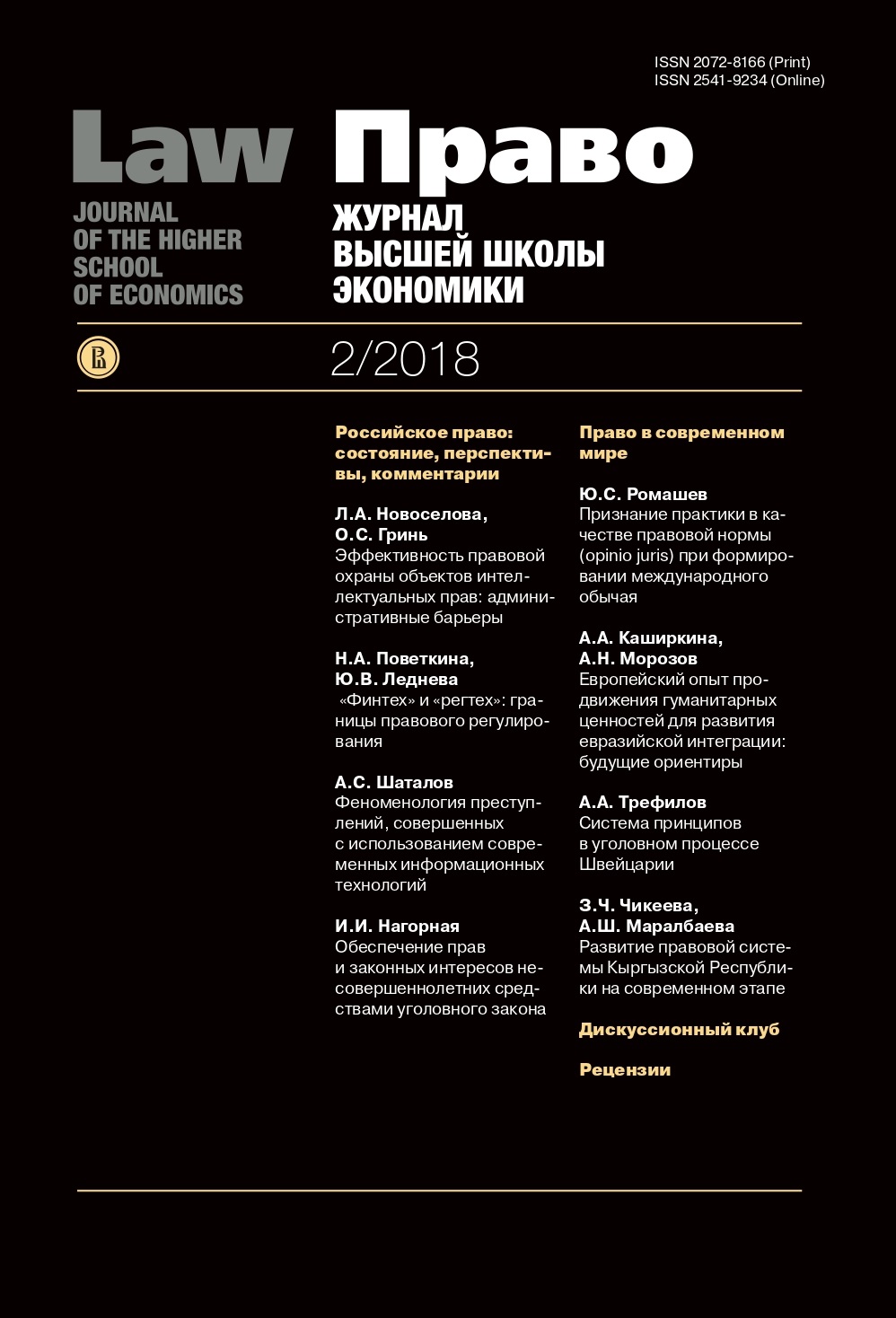
Феноменология преступлений, совершенных с использованием современных информационных технологий
Аннотация
Феноменология (греч.) в буквальном толковании — это учение о феноменах, т.е. наблюдаемых явлениях или событиях. В современной философии оно выступает как метод научного анализа сознания и имманентных, априорных структур человеческого существования. Данная статья — результат применения этого метода для постановки и осмысления оптимальных путей решения проблем, непосредственно связанных с деятельностью по предотвращению, выявлению, раскрытию и расследованию преступлений, совершенных с использованием современных информационных технологий. Прибегнув к некоторым обобщениям, автор предпринял попытку найти ответ на вопрос, почему на фоне научных достижений отечественной криминалистики, при обилии новых идей, концепций, технологий, методик, криминалистических алгоритмов и программ расследования прогресс в деле борьбы с преступностью остается малозаметным? Главная причина такого положения дел ему видится в том, что российская криминалистика долгое время развивалась в отрыве от ведущих зарубежных исследовательских школ. Вместе с тем такое ее состояние сохраняется и сейчас, несмотря на охватившие практически все страны мира глобальные интеграционные процессы. В качестве главного направления преодоления кризисных явлений автор позиционирует имплементацию в научные ресурсы отечественной криминалистики современных информационных технологий вообще, и для повышения эффективности борьбы с преступлениями, совершаемыми с использованием компьютерных и сетевых возможностей в частности. Борьбу с ними он считает проблемой международного масштаба, поскольку меры по предотвращению, выявлению, раскрытию и расследованию преступлений такого рода не могут быть результативными лишь на национальном уровне в силу транснационального и трансграничного характера сети «Интернет». С учетом непрекращающегося увеличения численности ее пользователей, закономерно порождающей их зависимость от информационного сообщества и уязвимость от разного рода киберпосягательств, произведен научный анализ современного состояния выявления и расследования преступлений такого рода и сформулированы рекомендации по повышению эффективности этой деятельности.
Литература
Batoev V.B., Semenchuk V.V. (2017) Ispol'zovanie kriptovalyuty v prestupnoy deyatel'nosti: problemy protivodeystviya [Using cryptocurrency in crimes: issues of counteracting]. Trudy Akademii upravleniya MVD Rossii, no 2, pp. 9-15.
Bondarenko D.D. (2015) Virtual'nye valyuty: sushchnost' i bor'ba s ikh ispol'zovaniem v prestupnykh tselyakh [Virtual currencies and tackling their use for criminal purposes]. Mezhdunarodnoe ugolovnoe pravo i mezhdunarodnaya yustitsiya, no 6, pp. 23-25.
Casey E. (2004) Digital evidence and computer crime. Elsevier: Academic Press, 690 p.
Finklea K., Theohary C. (2015) Cybercrime: conceptual issues for congress and US. law enforcement. Washington, D.C.: Congressional Research Service, 27 p.
Kirwan G., Power A. (2012) The psychology of cyber crime: concepts and principles. Hershey, PA: Information Science Reference, 372 p.
Nekrasov V.N. (2017) Aktual'nye voprosy ugolovno-pravovoy okhrany informatsionnoy deyatel'nosti v Rossii [Criminal law protection of information activity in Russia]. Aktual'nye problemy rossiyskogo prava, no 7, pp. 108-114.
Russkevich E.A. (2017) Ugolovnoe pravo i informatizatsiya [Criminal law and information technologies]. Zhurnal rossiyskogo prava, no 8, pp. 73-80.
Shevchenko E.S. (2015) Aktual'nye problemy rassledovaniya kiberprestupleniy [Issues of investigating cybercrimes]. Ekspert-kriminalist, no 3, pp. 29-30.
Stepanov-Egiyants V.G. (2016) Otvetstvennost' za prestupleniya protiv komp'yuternoy informatsii po ugolovnomu zakonodatel'stvu Rossiyskoy Federatsii [Liability for a crime against computer information under RF criminal law]. Moscow: Statut, 190 p. (in Russian)
Sokol V. Yu. (2017) Krizis otechestvennoy kriminalistiki [Crisis of Russian criminal science]. Krasnodar: MVD Rossii, 332 p. (in Russian)
Truntsevskiy Yu.V. (2016) Sostoyanie i tendentsii prestupnosti v Rossiyskoy Federatsii i prognozy ee razvitiya [State and Trends in crime in Russia and forecasts]. Rossiyskaya yustitsiya, no 8, pp. 29-31.
Vekhov V.B. (2016) Elektronnye sledy v sisteme kriminalistiki [Electronic signs in criminal science]. Sudebnaya ekspertiza. Moscow: Yurlitinform, pp. 10-19.
Viano C. (2017) Cybercrime, organized crime, and societal responses: international approaches. Dordrecht: Springer International Publishing, 378 p.
Wall D. (2005) Cybercrime as a conduit for criminal activity. Information, Technology and the Criminal Justice System. Beverly Hills, CA: Sage Publications, pp. 77-98.
Young J. et al. (2012) Distinct sector hashes for target file detection. Computer, no 45, pp. 28-35.
Copyright (c) 2018 Право. Журнал Высшей школы экономики

Это произведение доступно по лицензии Creative Commons «Attribution-ShareAlike» («Атрибуция — На тех же условиях») 4.0 Всемирная.