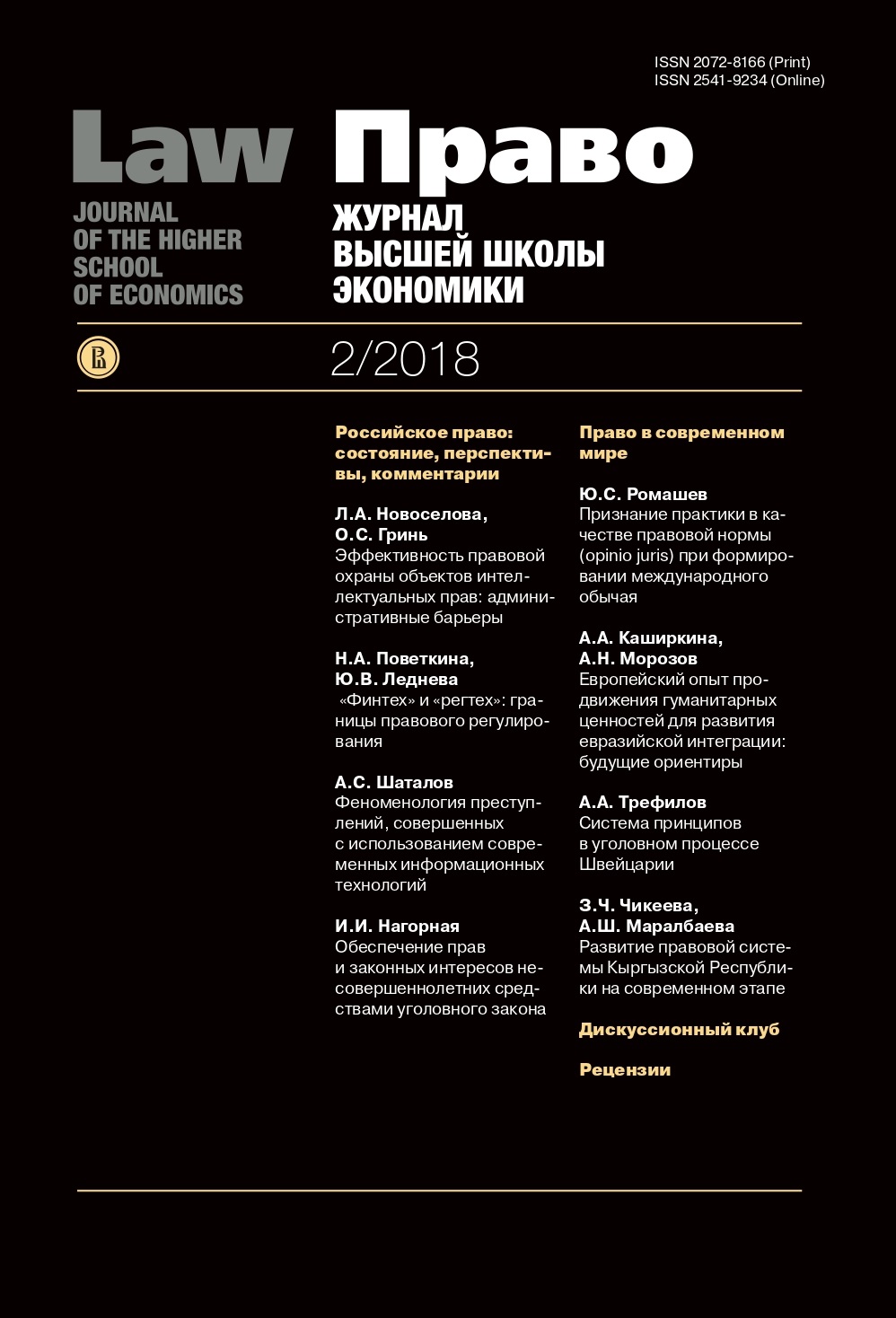
Обеспечение прав и законных интересов несовершеннолетних средствами уголовного закона
Аннотация
Несовершеннолетние являются социальной группой, нуждающейся в повышенной охране, в том числе средствами уголовного закона. Особенности личности несовершеннолетних, их прав и законных интересов влияют на содержание норм Уголовного кодекса России, которые охраняют права и законные интересы несовершеннолетних потерпевших (пострадавших) от преступления и предусматривают меры воздействия на лиц, совершивших уголовно наказуемые деяния в возрасте от 14 до 18 лет. Никакие уголовно-правовые меры не могут быть применены к лицам, не достигшим возраста, с которого наступает уголовная ответственность, и лицам, нарушившим уголовно-правовой запрет в состоянии «возрастной невменяемости» согласно ч. 3 ст. 20 Уголовного кодекса. В статье рассматриваются такие особенности личности несовершеннолетних, как несформировавшаяся система ценностей, повышенная внушаемость, импульсивность, неспособность оценить ситуацию и т.п., а также характеризуются их права и законные интересы. Указывается, что уголовный закон призван не только установить повышенную ответственность за посягательства на несовершеннолетних и обеспечить защиту их прав компетентными органами, но и оградить семью несовершеннолетнего от произвольного вмешательства в ее жизнь иных лиц, включая должностных лиц органов опеки и попечительства, поскольку воспитание в семье рассматривается как важнейший самостоятельный законный интерес несовершеннолетнего. Обосновывается тезис об «уменьшенной вине» несовершеннолетнего в преступлении по сравнению с виной взрослых. Эта и другие особенности, включая повышенную способность к позитивным изменениям личности, объясняют снижение сроков наказания, расширение возможности освобождения от уголовной ответственности и от наказания и наличие других специальных норм в Уголовном кодексе. Аргументируется необходимость уточнения понятия «возрастная невменяемость», а также дальнейшего исследования и введения в действие альтернативных мер воздействия, в том числе предусмотренных иными отраслями права, на несовершеннолетнего, совершившего запрещенное уголовным законом деяние. Такие меры способны помочь избежать негативных последствий применения уголовного наказания к несовершеннолетнему, что соответствует как его интересам, так и интересам общества в целом.
Литература
Alisievich E. S. (2013) K voprosu ob opredelenii ponyatiya «uyazvimye gruppy» v mezhdunarodnom prave prav cheloveka [On the concept of vulnerable groups in international human rights law]. Evraziyskiy yuridicheskiy zhurnal, no 1, pp. 29-33.
Esakov G.A. (ed.) (2017) Kommentariy k Ugolovnomu kodeksu Rossiyskoy Federatsii [Commentary to the RF Criminal Code]. Moscow: Prospekt, 736 p. (in Russian)
Inogamova-Khegay L.V., Rarog A.I., Chuchaev A.I. (eds.) (2008) Ugolovnoe pravo. Osobennaya chast' [Criminal law. Special part]. Moscow: INFRA-M, 800 p. (in Russian)
Lelekov V.A. (2014) Prestupnyy retsidiv nesovershennoletnikh i ego preduprezhdenie [Averting repeated offence among the minors]. Vestnik Voronezhskogo instituta MVD Rossii, no 4, pp. 15-23.
Mayba Ye. (2015) Justice Reform: Who's Got the Power. Themis: Research Journal of Justice Studies and Forensic Science, vol. 3, no 1, pp. 46-77.
Pantyukhina I.V. (2016) Rol' sochetaniya nesovershennoletnego vozrasta sub’ekta i poterpevshego v polovykh prestupleniyakh [Role of minor age victim in sexual offences]. Vestnik KGU im. N.A. Nekrasova, no 4, pp. 225-228.
Rarog A.I. (ed.) (2017) Ugolovno-pravovoe vozdeystvie [Criminal law influence]. Moscow: Prospekt, 288 p. (in Russian)
Savel'ev A.I. (2012) Nesovershennoletnie zhertvy prestupleniy kak ob’ekt viktimologicheskogo issledovaniya [Crime victim under age in victimologic research]. Psikho-pedagogika v pravookhranitel’nykh organakh, no 1, pp. 61-65.
Shust K.B. (2014) Extending Sentencing Mitigation for Deserving Young Adults. The Journal of Criminal Law and Criminology, vol. 104, no 3, pp. 667-704.
Tayurskaya E.A. (2014) Nesovershennoletniy v ugolovnom prave Rossii [The minor in Russian Criminal Law]. Vestnik Vostochno-Sibirskogo instituta MVD Rossii, no 3, pp. 7-11.
Tsui J. (2014) Breaking Free of the Prison Paradigm: Integrating Restorative Justice Techniques into Chicago's Juvenile Justice System. The Journal of Criminal Law and Criminology, vol. 104, no 3, pp. 641-643.
Vinogradov A.V., Poltarygin R.V. (2016) Ugolovnyy zakon kak sredstvo zashchity interesov nesovershennoletnikh [Criminal law as a means of protecting minors]. Izvestiya Tul’skogo gosudarstvennogo universiteta. Ekonomicheskie i yuridicheskie nauki, no 1-2, pp. 132138.
Vishnevetskiy K.V. (2015) Viktimologicheskaya kharakteristika nesovershennoletnikh [Victimologic characteristics of the minors]. Teoriya i praktika obshchestvennogo razvitiya, no 2, pp. 93-95.
Zhalinskiy A.E. (2010) Pravoobrazuyushchee deystvie sudebnoy praktiki po ugolovnym delam: voprosy sovershenstvovaniya [Dispositive influence of criminal case practice: matters of improving]. Ugolovnoe pravo, no 4, pp. 127-130.
Zhalinskiy A.E. (2009) Ugolovnoe pravo v ozhidanii peremen: teoretiko-instrumental’nyy analiz [Criminal law expecting changes: theory and practice analysis]. Moscow: Prospekt, 400 p. (in Russian)
Copyright (c) 2018 Право. Журнал Высшей школы экономики

Это произведение доступно по лицензии Creative Commons «Attribution-ShareAlike» («Атрибуция — На тех же условиях») 4.0 Всемирная.