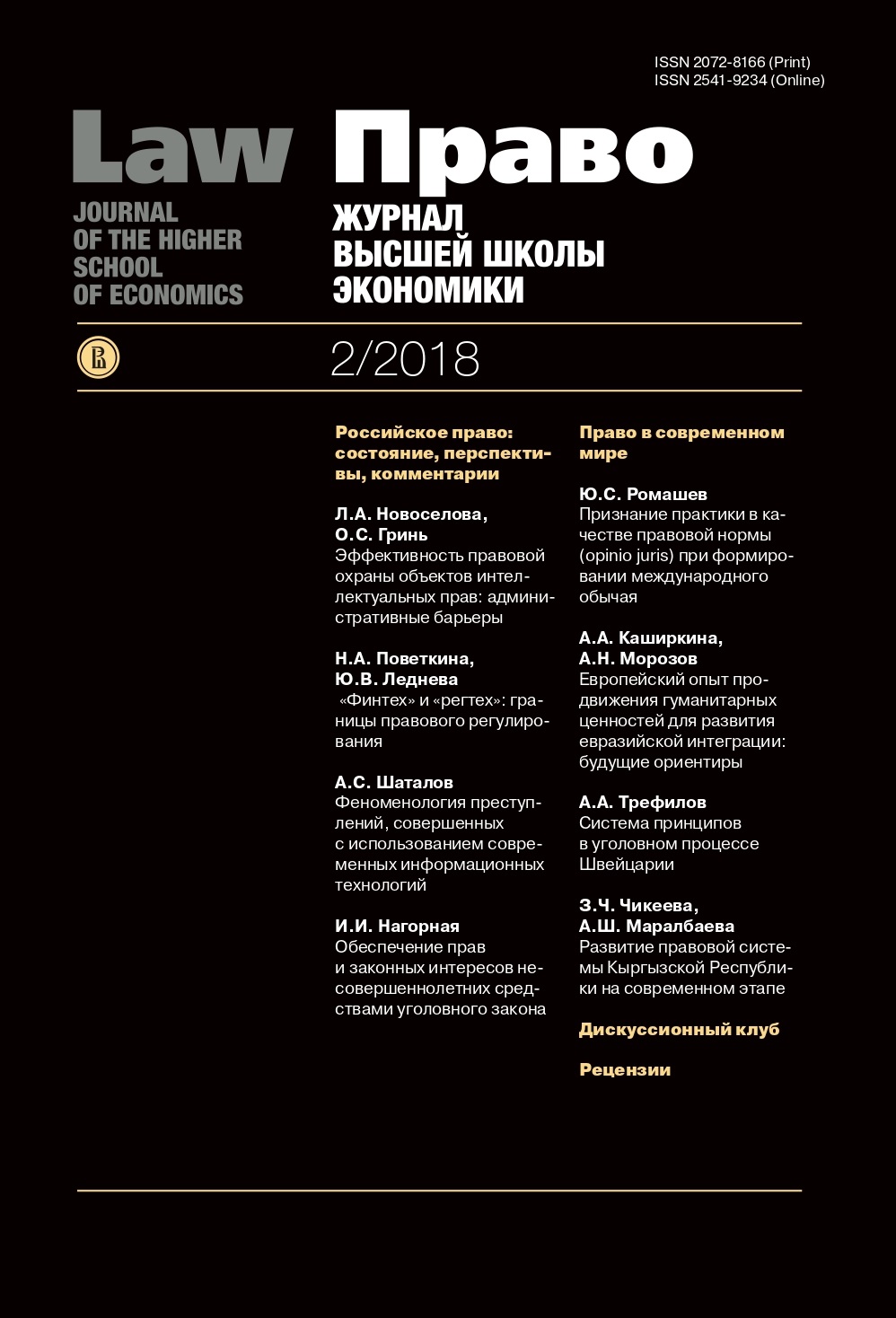
Эффективность правовой охраны объектов интеллектуальных прав: административные барьеры
Аннотация
В программных документах, направленных на трансформацию и модернизацию российской экономики в условиях стремительно развивающихся технологий, поставлена задача устранения административных барьеров для развития науки и техники, изобретательства, эффективности правового регулирования в сфере интеллектуальной собственности. В связи с этим огромное значение приобретает анализ элементов структуры государственного управления в этой области и выявление препятствий для ее результативного функционирования. Целью исследования является определение уровней постановки задач по устранению препятствий в развитии интеллектуальной собственности, анализ функций и структуры государственных органов, осуществляющих регулирование в рассматриваемой сфере, пробелов и противоречий в правовом регулировании в качестве основы разработки предложений по оптимизации усилий государства в сфере развития науки и техники, защиты интеллектуальной собственности. В исследования использованы диалектический, формально-логический, функциональный и другие общенаучные методы исследования, а также специально-юридические методы, в частности, формально-юридический. Дана характеристика административным правовым барьерам, определено содержание этого понятия в узком и широком значениях, выявлены уровни решения задач устранения барьеров (стратегический, программный, текущий). Определены цели и принципы государственного регулирования результатов интеллектуальной деятельности, выявлены недостатки государственного управления в данной сфере, вызванные распределением функций между многочисленными ведомствами с разнонаправленными интересами и задачами; определены категории текущих задач по устранению административных барьеров и варианты их решения. Анализ системы формулирования задач позволяет сделать вывод, что цели и принципы государства не находят полного отражения в программных документах, определяющих текущие задачи исполнительных органов; отсутствие единого регулирующего центра — «мегарегулятора» в области интеллектуальных прав — снижает результативность государственного воздействия и создает препятствия развитию науки и техники. Определены некоторые блокирующие правовые механизмы регистрации интеллектуальных прав и их защиты.
Литература
Agamagomedova S.A. (2017) Administrativnye bar'ery pri prokhozhdenii tamozhennogo kontrolya: ponyatie, vidy i sposoby preodoleniya [Administrative barriers in customs control: concept, types and solutions]. Zhurnal rossiyskogo prava, no 6, pp. 79-88.
Anawalt H. (2003) International Intellectual Property, Progress, and the Rule of Law. Santa Clara High Technology Law Journal, vol. 19, issue 2, pp. 383-405.
Bermudez J., Oliveira M. (eds.) (2004) Intellectual Property in the Context of the WTO TRIPS Agreement: challenges for public health. Rio de Janeiro: Oswaldo Cruz Foundation, 170 p.
Evstaf'ev V., Orekhov D., Khitrova L. (2017) Problemy upravleniya pravami Rossiyskoy Federatsii na rezul'taty intellektual'noy deyatel'nosti [Issues of administrating the rights of the Russian Federation and the results of intellectual activity]. Promyshlennaya sobstvennost', no 1, pp. 17-22.
Fabrichnyi S.Yu., Ruzakova O.A. (2017) Kommercializacia intellektualnoi sobstvennosti: problemy regulirovania. Patenty i licenzii, no 7, pp. 41-48.
Ivanov A. Yu. (2017) Prinuditel'noe litsenzirovanie dlya innovatsionnogo razvitiya: o neobkhodimosti balansirovki rezhima intellektual'nykh prav [Involuntary licensing of innovative development: on balancing the regime of intellectual rights]. Zakon, no 5, pp. 78-93.
Ivliev G.P. (2017) Printsip dobrosovestnosti v deyatel'nosti Federal'noy sluzhby po intellektual'noy sobstvennosti [The principle of good faith in the activity of the Federal Intellectual Property Service]. Vestnik grazhdanskogo prava, no 2, pp. 56-62.
Kalyatin V.O. (2018) Razvitie sistemy ewgulirovania rasporyazhenia pravami na intellektualnyu sobstvennost v Rossii [Development of regulating direction of intellectual property rights in Russia]. Imyschestvennye otnoshenia v Rossiyskoi Federatcii, no 2, pp. 54-63.
Minbaleev A.V. (2016) Sistema gosudarstvennogo upravleniya v sfere intellektual'noy sobstvennosti [The system of state administration in intellectual property]. Vestnik YuUrGU. Seriya «Pravo», no 3, pp. 112-115.
Naryshkin S.E., Khabrieva T.Ya. (2006) Administrativnaya reforma v Rossii: nekotorye itogi i zadachi yuridicheskoy nauki [Administrative reform in Russia: preliminary results and objectives of legal science]. Zhurnal rossiyskogo prava, no 11, p. 9.
Nozdrachev A.F. (2011) Sistemnaya reglamentatsiya administrativnoy deyatel'nosti: otechestvennaya doktrina i praktika [System regulation of administrative activity: Russian doctrine and practice]. Zakonodatel'stvo i ekonomika, no 8, pp. 5-41.
Ruzakova O.A., Grin' E.S. (2017) Primenenie tekhnologii Blockchain k sistematizatsii rezul'tatov intellektual'noy deyatel'nosti [Blockchain in Systematizing the results of intellectual property activity]. Vestnik Permskogo universiteta. Yuridicheskie nauki, no 38, pp. 508-520.
Shishkov B.E. (2015) Mekhanizmy gosudarstvenno-chastnogo partnerstva v oboronno-promyshlennom komplekse [The mechanisms of public-private partnership in military-industrial complex]. Imushchestvennye otnosheniya v Rossiyskoy Federatsii, no 12, pp. 88-97.
Vaypan V.A. (2017) Osnovy pravovogo regulirovaniya tsifrovoy ekonomiki [Fundamentals of legal regulation in digital economy]. Pravo i ekonomika, no 11, pp. 5-18.
Voynikaynis E. (2016) Pravo intellektual'noy sobstvennosti v tsifrovuyu epokhu: paradigma balansa i gibkosti [Intellectual property law in the digital age: paradigm of balance and flexibility]. Moscow: Yurisprudentsiya, 552 p. (in Russian)
Copyright (c) 2018 Право. Журнал Высшей школы экономики

Это произведение доступно по лицензии Creative Commons «Attribution-ShareAlike» («Атрибуция — На тех же условиях») 4.0 Всемирная.