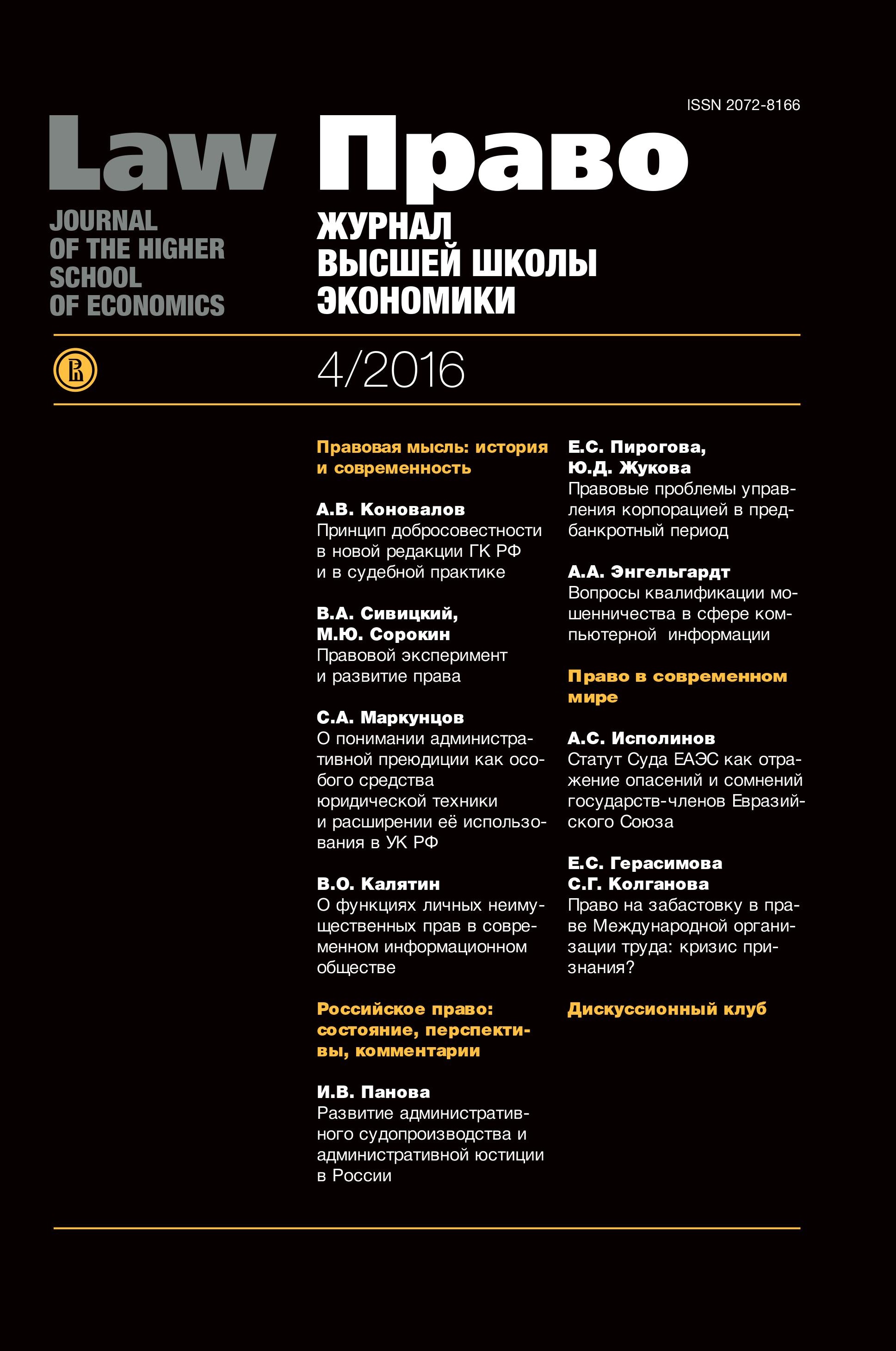
Статут Суда ЕАЭС как отражение опасений и сомнений государств-членов Евразийского экономического союза
Аннотация
Начало в январе 2015 г. работы Суда Евразийского экономического союза ознаменовало еще одну попытку государств-членов ЕАЭС создать региональный интеграционный суд. В отечественной литературе уже появились исследования, в которых подробно анализируются Статут и Регламент Суда ЕАЭС, в том числе в сравнении как с полномочиями просуществовавшего три года Суда ЕврАзЭС, так и с компетенцией и организацией работы Суда Европейского Союза. Однако пока за рамками исследований остаются вопросы мотивов, которыми руководствовались государства-члены ЕАЭС, принимая решения о создании Суда, а также наделяя его определенной юрисдикцией, которая разительно отличается как от полномочий Суда ЕС, так и от компетенции Суда ЕврАзЭС. Автор настоящей статьи пытается восполнить этот недостаток, анализируя Статут Суда ЕАЭС, с одной стороны как отражение страхов, сомнений и опасений государств-членов в отношении создаваемого ими суда, а с другой, как совокупность мер контроля над созданным судом для того, чтобы избежать или нивелировать нежелательные для них судебные решения. Автор приходит к выводу, что поиски государств-членов ЕАЭС баланса между, с одной стороны, независимостью и эффективностью Суда ЕАЭС, и желательной для них степенью контроля над Судом — с другой, не оказались стратегически удачными и выверенными. Преобладание страхов и сомнений государств при разработке Статута Суда привело к появлению ослабленного суда, что вскоре станет ощущаться на качестве процесса евразийской интеграции. Ограничения юрисдикции Суда не способствуют росту его авторитета и легитимности ни в у национальных судов стран-членов ЕАЭС, ни в глазах потенциальных заявителей, которые могут предпочесть искать судебную защиту своих прав в других международных или национальных судах, оспаривая акты ЕАЭС в ЕСПЧ в ОРС ВТО, в инвестиционных арбитражах, либо в конституционных судах стран-членов ЕАЭС.
Литература
Alter K. (1998) Who Are the Masters of the Treaty? European Governments and the European Court of Justice. International Organizations, vol. 52, no 1, pp. 121-147.
Alter K. (2006) Private Litigants and the New International Courts. Comparative Political Studies, vol. 39, no 1, pp. 22-49.
Alter K. (2008) Agents or Trustees? International Courts in Their Political Context. European Journal of International Relations, vol. 14, pp. 33-63.
Alter K., Gathii J., Helfer L. (2016) Backlash against International Courts in West, East and Southern Africa: Causes and Consequences. The European Journal of International Law, vol. 27, no 2, pp. 293-328.
Ben-Shahar O. (2004) Agreeing to Disagree': Filling Gaps in Deliberately Incomplete Contracts. Wisconsin Law Review, no 2, pp. 389-428.
Helfer L., Slaughter A.-M. (2005) Why States Create International Tribunals: A Response to Professors Posner and Yoo. California Law Review, vol. 93, pp. 1-58.
Kembaev Zh. (2016) Sravnitel'no-pravovoy analiz funktsionirovaniya Suda Evraziyskogo ekonomicheskogo soyuza [A Comparative Analysis of EAEU Court Activity]. Mezhdunarodnoe pravosudie, no 2 (18), pp. 30-45.
Kozheurov Ya. (2016) Instituty mezhdunarodnogo pravosudiya i pravo Evraziyskogo Ekonomicheskogo Soyuza: smotr pravovykh sil [Institutes of International Justice and Law of the Eurasian Economic Union]. Rossiyskiy yuridicheskiy zhurnal, no 4, pp. 4-16.
Mackenzie R., Sands Ph. (2003) International Courts and Tribunals and the Independence of the International Judge. Harvard International Law Journal, vol. 44, no 1, pp. 271-295.
Neshataeva T.N. (ed.) (2015) Evraziyskaya integratsiya: rol' Suda [European Integration: Role of Court]. Moscow: Statut, 304 p. (in Russian)
Quigley J. (2009) The United States' Withdrawal from International Court of Justice Jurisdiction in Consular Cases: Reasons and Consequences. Duke Journal of Comparative and International Law, vol. 19, pp. 263-306.
Romano C. (2006) From the Consensual to the Compulsory Paradigm in International Adjudication: Elements for a Theory of Consent. New York University. Public Law and Legal Theory Working Paper. 20 p.
Shany Y. (2014) Assessing Effectiveness of International Courts. Oxford: Oxford University Press, 344 p.
Trachman J. (1999) The Domain of WTO Dispute Resolution. Harvard International Law Journal, no 2, pp. 346-350.
Wet E. de (2013) The Rise and Fall of the Tribunal of the Southern African Development Community: Implications for Dispute Settlement in Southern Africa. ICSID Review, pp. 1-19.
Copyright (c) 2016 Право. Журнал Высшей школы экономики

Это произведение доступно по лицензии Creative Commons «Attribution-ShareAlike» («Атрибуция — На тех же условиях») 4.0 Всемирная.