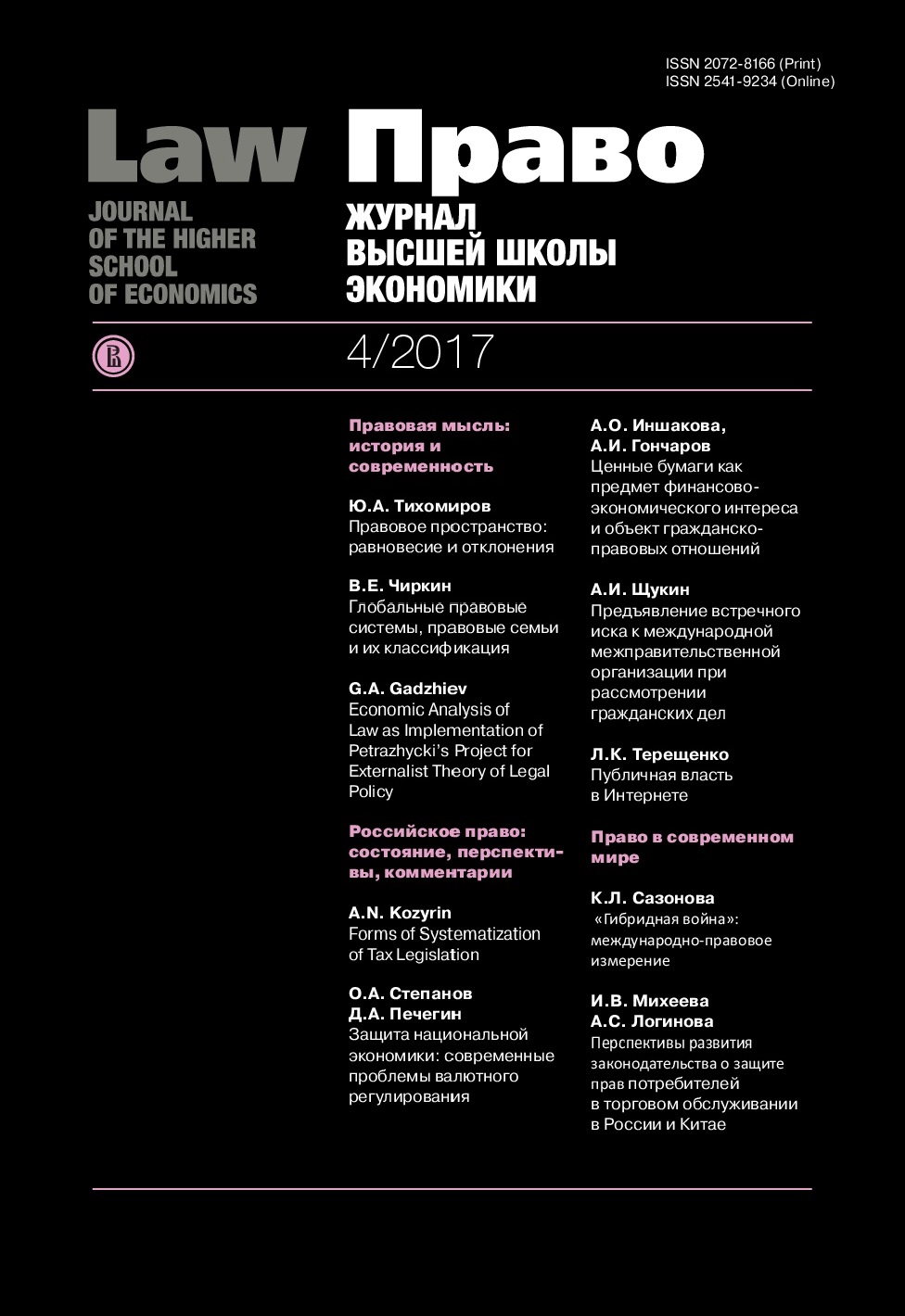
Защита национальной экономики: современные проблемы валютного регулирования
Аннотация
На международном уровне сохраняется неопределенность в вопросах валютно-правовой ответственности, что во многом связано с различиями в правовом регулировании. С 2018 года в Европейском союзе вступят в силу новые правила расчета ликвидности банков и коэффициентов соотношения заемных средств и активов, которые меняют его монетарную политику. Новые правила устраивают далеко не всех. Несколько крупных французских банков уже обратилось в Европейский суд с иском, чтобы эти правила изменить. По заявлениям финансовых аналитиков, Европейский центральный банк стоит на пороге отказа от «ультрамягкой» денежно-кредитной политики в сторону нейтральной и далее готовится к ее ужесточению. В большинстве случаев в качестве нарушителей валютного законодательства выступают компании, осуществляющие внешнеэкономическую деятельность. Однако гражданско-правовых мер может быть недостаточно для защиты нормального функционирования и развития внутреннего валютного рынка. По этой причине в законодательстве Российской Федерации предусмотрена ответственность за нерепатриацию денежных средств. Однако не все страны предусматривают такую ответственность. Между тем ввиду возрождения идеи частных денег в виде криптовалюты и других современных денежных суррогатов вопрос о том, как защитить национальную экономику, требует самостоятельного анализа. Поэтому актуальность поиска общих подходов в сфере валютного регулирования возросла. Предметом исследования является система валютно-денежных отношений с точки зрения обеспечения ее стабильности, в том числе уголовно-правовыми средствами. Цель анализа состоит в том, чтобы наглядно показать механизмы защиты внутреннего валютного рынка и проблемы валютно-денежной системы. Статья подготовлена на основе сравнительно-правового и формально-логического методов и метода системного анализа. По мнению авторов, это может способствовать выработке единообразного подхода к проблеме, без которого достичь успеха будет чрезвычайно трудно. Сделан вывод, что ввиду новых вызовов в мировой экономике и появления криптовалюты необходимо переосмыслить феномен валютных преступлений, изучить опыт борьбы с денежно-кредитными преступлениями в других странах и оценить общие механизмы борьбы с валютными преступлениями.
Литература
Bryans D. (2014) Bitcoin and Money Laundering: Mining for an Effective Solution. Indiana Law Journal, vol. 89, pp. 441-472.
Blanpain R., Engels C. (eds.) (2001) Comparative Labor Law and Industrial Relations in Industrialized Market Economies. The Hague: Kluwer, 389 p.
Cindori S., Petrović T. (2016) Indikator irizičnosti bankarskog sektora u okvirima prevencije pranja novca. Zbornik Pravnog fakulteta u Zagrebu, no. 6, pp. 761-784.
Guadamuz A., Marsden C. Bitcoin: The Wrong Implementation of the Right Idea at the Right Time. 19 p. Available at: URL: https://ssrn.com/abstract=2526736 (accessed: 12.09.2017)
Dong H., McCauley R. Offshore Markets for the Domestic Currency: Monetary and Financial Stability Issues. BIS Working Paper, no. 320, 32 p. Available at: URL: https://ssrn.com/abstract=1699740 (accessed: 12.09.2017)
Dragojević M. (2015) Monetary Policy in Croatia: Challenges in the Medium Term. Proceedings of 8th International Conference «Economic Integration, Competition and Cooperation» (University of Rijeka, Faculty of Economics). 12 p. Available at: URL: https://ssrn.com/abstract=2232086 (accessed: 12.09.2017)
Kaal W., Calcaterra C. Crypto Transaction Dispute Resolution (2017). 54 p. Available at: URL: https://ssrn.com/abstract=2992962 (accessed: 12.09.2017)
Kucherov I.I. (2011) Valyutnoe pravo Rossii. Akademicheskiy kurs lektsiy [Currency law of Russia. Lectures]. Moscow: Yustitsinform, 230 p.
Leonhard R. Corporate Governance on Ethereum's Blockchain (May 30, 2017). 35 p. Available at: URL: https://ssrn.com/abstract=2977522 (accessed: 12.09.2017)
Levkovich A., Vecherskiy A. (2008) Analiz evolyutsii politiki valyutnogo kursa v stranakh Tsentral'noy i Vostochnoy Evropy [Evolution in the exchange rates of Central and Western Europe]. Bankayski vesnik, no 10, pp. 26-35.
Leyba A. (2014) Real'naya zhizn' virtual'nykh deneg. EZh-Yurist, no. 23, pp. 1-4.
Polasik M., Piotrowska A., Wisniewski T., Kotkowski R., Lightfoot G. Price Fluctuations and the Use of Bitcoin: An Empirical Inquiry. 60 p. Available at: URL: https://ssrn.com/abstract=2516754 (accessed: 12.09.2017).
Raskin M., Yermack D. (2016) Digital Currencies, Decentralized Ledgers, and the Future of Central Banking. Research Handbook on Central Banking. 19 p. Available at: URL: https://ssrn.com/abstract=2773973 (accessed: 12.09.2017)
Salvatore D., Rengifo E.W., Ozsoz E. (2008) Dollarization as an Investment Signal in Developing Countries: The Case of Croatia, Czech Republic, Peru, Slovak Republic and Turkey. Fordham University Department of Economics Discussion Paper No. 2008-16. 27 p. Available at: URL: https://ssrn.com/abstract=1272092 (accessed: 12.09.2017)
Wright A., De Filippi P. (2015) Decentralized Blockchain Technology and the Rise of Lex Cryptographia. 58 p. Available at: URL: https://ssrn.com/abstract=2580664 (accessed: 12.09.2017)
Copyright (c) 2017 Право. Журнал Высшей школы экономики

Это произведение доступно по лицензии Creative Commons «Attribution-ShareAlike» («Атрибуция — На тех же условиях») 4.0 Всемирная.