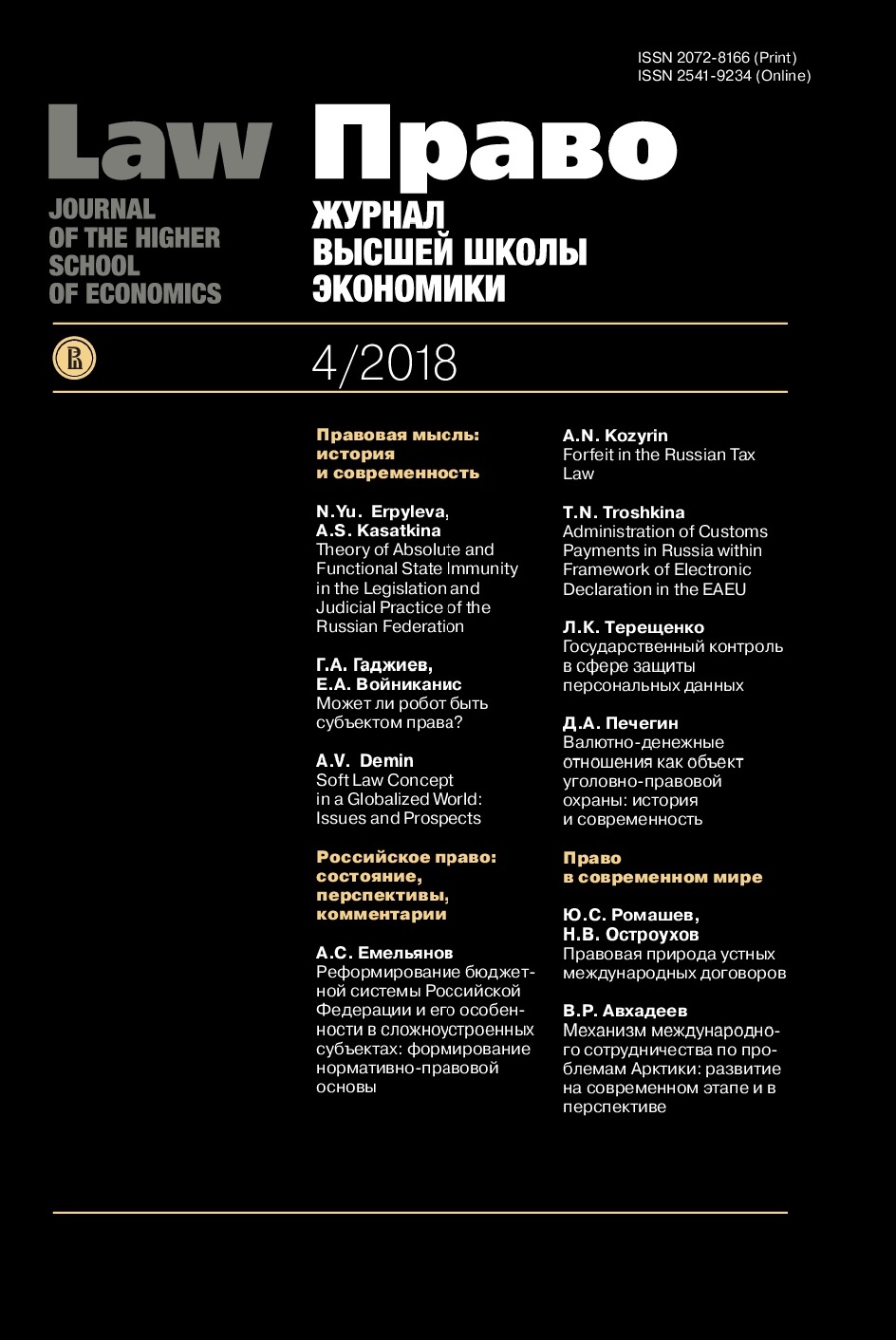
Реформирование бюджетной системы Российской Федерации и его особенности в сложноустроенных субъектах: формирование нормативно-правовой основы
Аннотация
Переход России в начале 90-х годов прошлого века к рыночным отношениям и современным принципам организации публичной власти существенно изменил содержание государственного планирования, но не упразднил его. Даже в самые кризисные 1990-1993 годы процесс социально-экономического планирования на уровне Правительства Российской Федерации развивался более чем интенсивно. За эти годы было принято более 100 государственных программ различного рода. Начиная с принятия и вступления в силу ныне действующего Бюджетного кодекса Российской Федерации, основной акцент в этом вопросе был сделан на реформировании бюджетной системы. Ее основным направлением стало внедрение программно-целевого подхода, предполагающего интеграцию финансового и социально-экономического планирования, обеспечение единства целеполагания на его кратко-, средне- и долгосрочном уровнях. Реформирование бюджетной системы России осуществляется на трех уровнях: федеральном, региональном и местном. Особенностью второго является то, что в 1990-х годах сформировался правовой феномен сложноустроенного субъекта федерации, требующий особого подхода к вопросам организации и осуществления бюджетного планирования. В первое десятилетие текущего века была предпринята попытка преодолеть данную проблему посредством укрупнения субъектов федерации, осуществлявшееся путем присоединения автономных округов к краям и областям, в состав которых они входили. Однако в силу ряда причин этого не сделали в отношении Тюменской области, входящих в ее состав Ханты-Мансийского автономного округа — Югры и Ямало-Ненецкого автономного округа, а также Архангельской области и входящего в ее состав Ненецкого автономного округа. Начало формирования уникального правового механизма взаимодействия указанных регионов в бюджетной сфере относится к 1990-м годам. Его научное осмысление тем ценнее, что именно он до настоящего времени в существенной степени обеспечивает стабильность российской экономики и бюджетной системы.
Литература
Artyukhin R.E. (2012) Voprosy razvitiya byudzhetnogo prava [The development of budgetary law]. Reformy i pravo, no 3, pp. 15-24.
Brezhnev O.V. (2016) Organizatsiya konstitutsionnogo pravosudiya v slozhnosostavnykh sub’ektakh Rossiyskoy Federatsii: problemy i perspektivy [Organizing constitutional justice in complex federal subordinate entities]. Rossiyskaya yustitsiya, no 3, pp. 44-47.
Keilhau W. (1951) Principles of Private and Public Planning. London: Allen Unwin, 331 p.
Komyagin D.L. (2011) Byudzhetnoe pravo Rossii: byudzhetnoe ustroystvo i byudzhetnaya sistema [Russian budgetary law]. Publichno-pravovye issledovaniya, no 3-4, pp. 115135.
Komyagin D.L. (2014) Rossiyskie byudzhetnye reformy: iz proshlogo v budushchee [Russian budgetary reforms: from past to future]. Reformy i pravo, no 1, pp. 57-65.
Komyagin D.L. (2012) Sistema printsipov byudzhetnogo prava: rossiyskoe zakonodatel'stvo i nauchnaya doktrina [Budgetary law principles: Russian legislation and doctrine]. Reformy i pravo, no 4, pp. 19-31.
Kozyrin A.N. (2007) Byudzhetnoe zakonodatel'stvo: nauchno-prakticheskiy kommentariy st. 2 Byudzhetnogo kodeksa Rossiyskoy Federatsii [Budgetary legislation: commentary to Russian Budgetary Code Article 2]. Reformy i pravo, no 1, pp. 14-18.
Kozyrin A.N. (ed.) (2002) Postateynyy kommentariy k Byudzhetnomu kodeksu Rossiyskoy Federatsii [Article-by-article commentary to the Budgetary Code]. Moscow: EKAR, 672 p. (in Russian)
Krokhina Yu. A. (2001) Byudzhetnoe pravo i byudzhetnyy federalizm [Budgetary law and budgetary federalism]. Moscow: Norma, 352 p. (in Russian)
Kuleshov E. (2005) Osobennosti razgranicheniya predmetov vedeniya i polnomochiy v slozhnosostavnykh sub’ektakh Federatsii [Subject matter and administration and powers in complex federal subordinate entities]. Zakonodatel'stvo i ekonomika, no 10, pp. 87-93.
Lorwin L. (1945) Time for Planning. A Social Economic Theory and Program for Twentieth Century. N.Y. and L.: Harper, 281 p.
Matnenko A.S. (2009) Pravovoe regulirovanie programmno-tselevogo metoda byudzhet-noydeyatel'nosti. Diss... doktor jurid. nauk. [Legal regulation of program-oriented method of budgeting. Doctor of juridical sciences thesis]. Omsk, 248 p.
Sokolova E.D. (2012) Sistema printsipov finansovogo prava [Financial law principles]. Finansovoe pravo, no 8, pp. 7-8.
Vershilo T.A. (2013) Printsip rezul'tativnosti i effektivnosti ispol'zovaniya byudzhetnykh sredstv: pravovye problemy realizatsii [Delivery and efficiency in applying budgetary funds: issues of application]. Finansovoe pravo, no 5, pp. 21-28.
Vlasenko N.A. (2013) Krizis prava: problemy i podkhody k resheniyu [Crisis of law: problems and approaches to solution]. Zhurnal rossiyskogo prava, no 8, pp. 43-54.
Copyright (c) 2018 Право. Журнал Высшей школы экономики

Это произведение доступно по лицензии Creative Commons «Attribution-ShareAlike» («Атрибуция — На тех же условиях») 4.0 Всемирная.