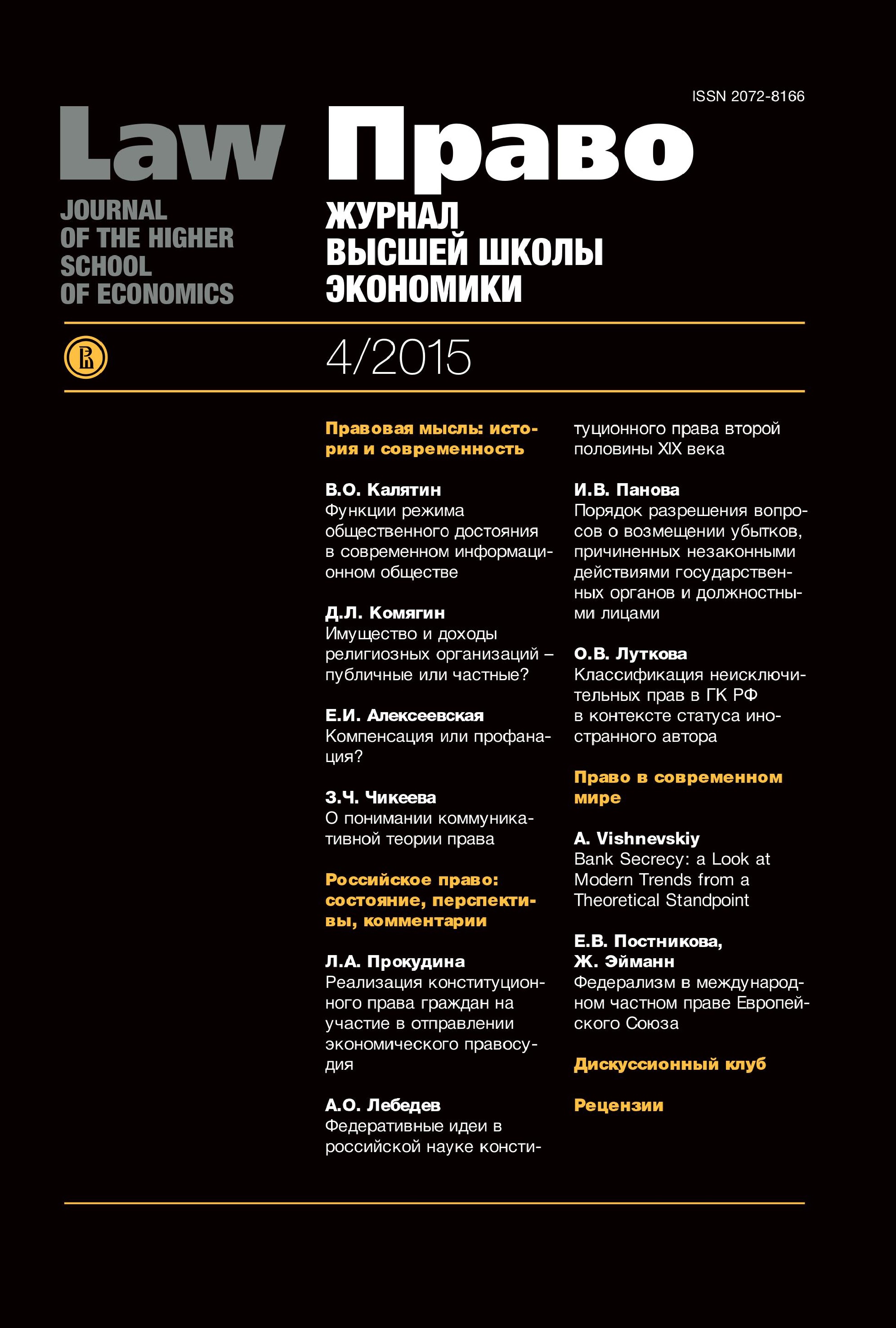
О понимании коммуникативной теории права
Аннотация
В статье рассмотрены особенности коммуникативной теории права, проанализированы труды ученых-юристов, рассматривающих развитие коммуникативной концепции правопонимания. Исследовано ее практическое применение в правовой системе Кыргызской Республики. Теоретико-правовой анализ научной дискуссии о коммуникативной концепции права позволяет определить ее персоналистскую и гуманитарную направленность. Особенностью коммуникативной концепции права, разработанной профессором А.В. Поляковым, является то, что она основана на интегративном подходе к правопониманию. В рамках коммуникативной теории права синтезируются социологическая и психологическая концепции правопонимания. Право рассматривается как психосоциокультурная целостность. В основе рассматриваемого подхода лежит взаимосвязь человека и его прав и обязанностей. В статье анализируются основные признаки права: наличие субъектов, обладающих взаимообусловленными (коррелятивными) правами и обязанностями; наличие социально признанных и общеобязательных правил поведения. Коммуникативная теория права ставит вопрос о целесообразности расширения сферы применения фикции от технико-юридического приема, нацеленного на преодоление консерватизма, к методологическому инструменту понимания права. Вместе с тем, необходимо изучить практическое применение данной теории в условиях глобализации и правовой конвергенции. В соответствии с коммуникативной теорией права правовая коммуникация, выражается в осмысленном взаимном поведении индивидуумов, осознающих свои правовые обязанности и субъективные права. Однако фактические отношения, связывающие двух субъектов, с их точки зрения, правами и обязанностями, таковыми не являются, если они не нормативны. Коммуникативная теория права получила в основном положительные отзывы со стороны научного сообщества. Дискуссионность отдельных положений этой теории выражается в следующем. Ученые-юристы обращают внимание на неоднозначность феноменологической редукции правового эйдоса, что может привести к субъективной трактовке научной концепции (И.Ю. Козлихин), на широкое использование различных правовых концептов, заимствованных из других наук (Ю.И. Гревцов), а также на широкое определение понятия права (Р.А. Ромашов) и т.д. В целом коммуникативная теория права носит междисциплинарный характер. Данная концепция наглядно демонстрирует развитие интегративных подходов к правопониманию в современной юриспруденции.
Литература
Alekseev N.N. (1998) Osnovy filosofii prava [Fundamentals of Philosophy of Law]. Saint Petersburg: Peterburgskiy yuridicheskiy institut, 216 p. (in Russian)
Grafskiy V.G. (2003) Ponimanie prava: nekotorye aktual'nye aspekty Traditsionnoy temy [Understanding Law: Topical Issues of the Traditional Topic]. Trudy MGYuA, no 10.
Gurvitch G. (2004) Filosofiya i sotsiologiya prava: Izbr. soch. [Philosophy and Sociology of Law. Selected Works]. Saint Petersburg: University Publishing, 848 p. (in Russian)
Kistyakovskiy B.A. (1999) Sotsial'nye nauki i pravo [Social Sciences and Law]. Filosofiya i sotsiologiya prava [Philosophy and Sociology of Law]. Saint Petersburg: RKhGI Publishing, 800 p. (in Russian)
Martyshin O.V. (2003) Sovmestimy li osnovnye tipy ponimaniya prava? [Do the Major Types of Legal Consciousness Agree?] Gosudarstvo i pravo, no 6, p. 13-21.
Mukhamet-Irekle A. (2003) Glavnoe v pravoponimanii — metodologiya (Methodology as the Main Feature of Legal Consciousness). Trudy MGYuA, no 10, p. 60-65.
Polyakov A.V. (2003) Obshchaya teoriya prava: Fenomenologo-kommunikativnyy podkhod: Kurs lektsiy [General Theory of Law: Phenomenology and Communicative Approach. Lectures]. Saint Petersburg: Yuridicheskiy tsentr Press, 845 p. (in Russian)
Polyakov A.V. (2002) Kommunikativnaya kontseptsiya prava (genezis i teoretiko-pravovoe obosnovanie). (Diss. Doktor Jurid. Nauk) [Communicative Concept of Law (Genesis and Legal Rationale) (Doctor of Juridical Sciences Dissertation as a Research Report)]. Saint Petersburg, 35 p.
Polyakov A.V. (2004) Obshchaya teoriya prava: Problemy interpretatsii v kontekste kommunikativnogo podkhoda. Saint Petersburg.: Izdatel'skiy dom Sankt-Peterburgskogo gosudarstvennogo universiteta, 864 p. (in Russian)
Romashov R.A. (2005) Realisticheskiy pozitivizm: Integrativnyy Tip sovremennogo pravoponimaniya [Realistic Positivism: integrated type of Modern Legal Understanding]. Kontseptsii sovremennogo pra-voponimaniya. R. A. Romashov, N. S. Nizhnik (eds.). Saint Petersburg: Librokom, p. 8-23.
Shershenevich G.F. (2001) Kurs grazhdanskogo prava [Course of Civil Law]. Tula: Avtograf, 720 p. (in Russian)
Timoshina E.V. (2002) Sovremennye problemy pravoponimaniya: Obsuzhdenie monografii A.V. Polyakova «Obshchaya teoriya prava» [Modern Issues of Legal Understanding: Discussing the Monograph by A.V. Polyakov General Theory of Law]. Pravovedenie, no 4, p. 213-223.
Trubetskoy E.N. Entsiklopediya prava (2012). Saint Petersburg: Librokom, 234 p. (in Russian)
Yashchenko A. S. (1999) Filosofiya prava Vladimira Solov'eva. Teoriya federalizma. Opyt sinteticheskoy teorii prava i gosudarstva [Philosophy of Law of Vladimir Solovyov. Theory of Federalizm. Essay on Synthetic Theory of Law and State]. Saint Petersburg: Aleteya Publishing, 256 p.
Yashchenko A. S. (1912) Sinteticheskaya teoriya prava v yuridicheskikh naukakh [Synthetic Theory of Law in Legal Sciences]. Zhurnal Ministerstva yustitsii, no 1, p. 128-142.
Copyright (c) 2015 Право. Журнал Высшей школы экономики

Это произведение доступно по лицензии Creative Commons «Attribution-ShareAlike» («Атрибуция — На тех же условиях») 4.0 Всемирная.